Babe Ruth weighed 215 pounds and over 23 seasons hit 714 home runs. I am 61 pounds and over the last 27 days I’ve hit 521 home runs. I like my odds of passing the Babe soon.
Every day on the east side of our house, a hundred feet from Mr. McDowell’s short wood fence part way up a hill to the north, I dumped a bag of softballs, baseballs, a rubber superball (my favorite!), tennis balls and whiffle balls on the ground for batting practice. My goal was simple; smack them as far over McDowell’s fence as possible. I used to hit golf balls before too, which was great for the ego but bad for neighbor’s houses which I hit with the 300-foot bombs they produced.
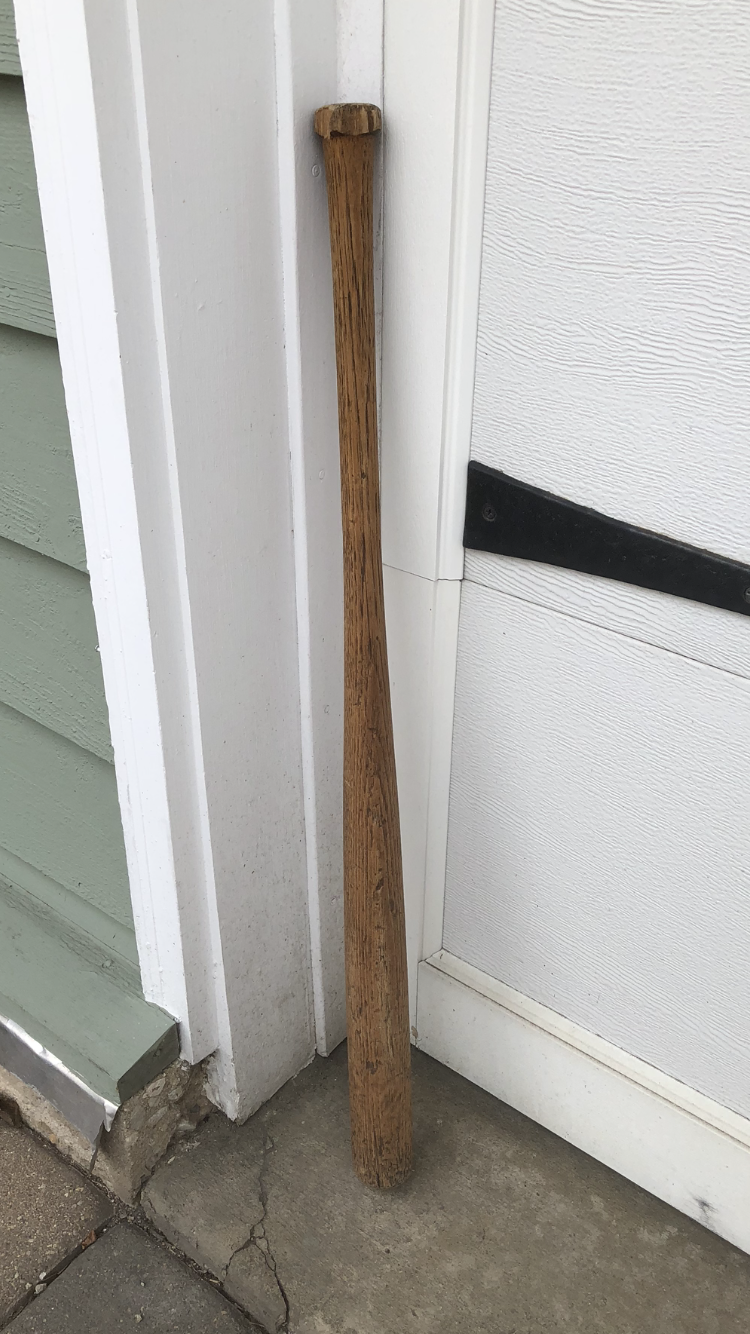
I wielded two mighty clubs. The Black Beast, a 23-ounce black stained bat with white cloth wrapped around the grip, slightly unwinding but still doing its job giving me a solid hold on the weapon. The other was a thin wisp of a bat that had belonged to my great grandfather Stanley (who everyone called “Bump”).

He had played semipro baseball for the Hastings Saxons in my hometown in the 1910’s and 1920’s. The bat was a Louisville Slugger but it was so old, the trademark was barely visible and both the knob and the end of the bat had small chunks missing.
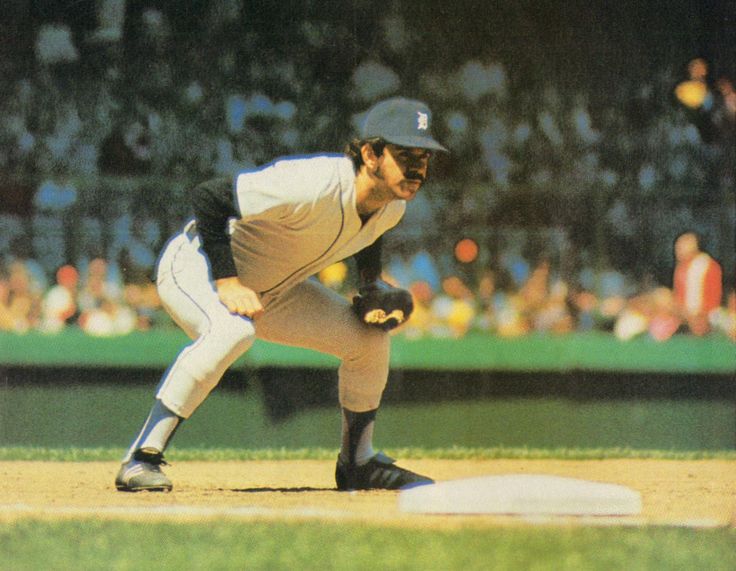
Right before my batting practice, I grabbed a tennis ball, stood in our gravel driveway about 40 feet from our house and took fielding practice. I would throw the ball against the house and make acrobatic scoops and quick pivots over to first ala Aurelio Rodriguez and Brooks Robinson (hence, the name of the game “Move Over Aurelio”). They were tricky throws as I had to avoid the garage door and the second story windows directly above the garage. A throw too far to the right would sail into Mom’s garden,, and an errant missile to the left might find its way into a bramble bush which yearned to stick me every time I reached in to retrieve the lost ball. The best throws threaded the needle between the top of the garage door and the start of the siding on the second story of the house; that was made of concrete blocks and balls that hit it would shoot back to me, giving me the chance to show off my quick reflexes and incredible range.
After securing another Gold Glove in fielding practice, I would turn to batting practice (which I called “Cannon Shot”). I had started this ritual with only three or four softballs but quickly learned there were two issues: first, I couldn’t hit the softballs over the distant fence since they were heavy and I was small for my age. Second, after I hit them (which took about 45 seconds) I had to stop and go get them, breaking any rhythm I had established. I tried to convince my little sister Chris to gather them up as I hit them, but thought better of that since I was likely to hit a scorching line drive directly at her head at some point. If she got hurt, Mom would probably make me apologize. I would switch back and forth with the bats; Bump’s bat for the tennis and whiffle balls and the Black Beast for the baseballs and softballs.
Every swing came at crucial moments in imaginary games – two down, bottom of the ninth, my team trailing by two runs. I developed a system where any drive over the McDowell fence was a game winning home run, any hit that struck the fence on the fly or after one bounce was a double and a frozen rope (that’s a line drive as I explained to my Mom) that hit halfway or higher up the hill was a single. Everything else was an out and disgrace.
All this practice was done for a reason. I had been the terror of tee ball, hitting blistering drives down the third base line and long fly balls over the heads of the left fielders. After two years of success in tee ball, I moved into a league where coaches pitch to the players. This took some adjusting, but since the coaches want the players to hit the ball, they pretty much threw underhanded lollipops right over the plate. Having developed my hand/eye coordination through countless games of Asteroids and Space Invaders, I eventually returned to my slugging ways.
A big change was coming, though. At age nine, I was moving into player pitch baseball where the object of the pitcher was to make me MISS when I swung. I knew I would need to up my game so starting with the first day of spring I followed my Cannon Shot training regimen to get ready.
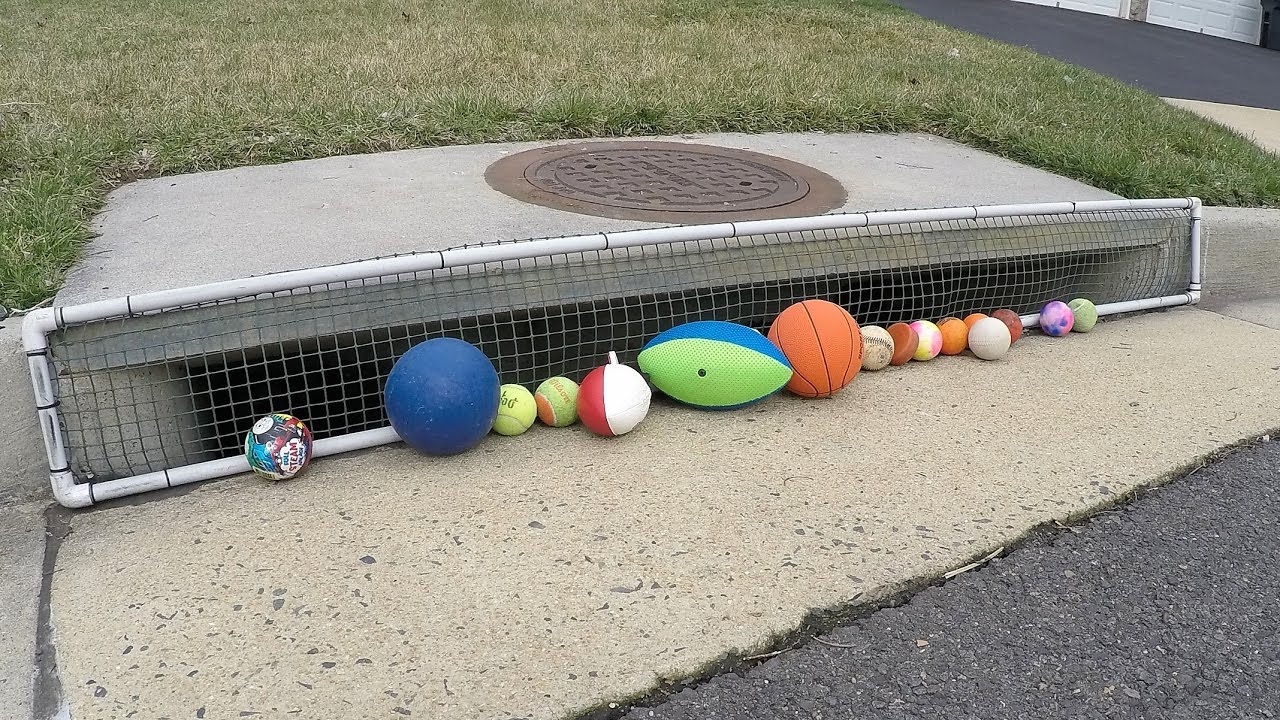
Besides my solo fielding and hitting practice, I also played real games in our front yard with my sisters and neighbors most days. Fortunately, our yard was big and had naturally-occurring bases – first base was a Speed Limit sign, second a Stop sign, third was an old dead maple tree and home plate was an exposed root of another tree. The yard had challenges though; any high fly ball was certain to strike a tree limb and fall, reducing it from a majestic homer to a 40-foot single. A low line drive was preferable but not without peril either; across the street in centerfield was a patch of poison ivy which I always ended up touching, despite my mother’s annual stern warning and the pictures of poison ivy she taped to my door in hopes that I would finally be able to identify and avoid it. If you missed the poison ivy in center, but instead hit the ball to right-center or right field, the game instantly stopped and every player would run for the ball, for right field meant the dreaded storm sewer. For some reason, the city left a gaping hole in the grate covering the storm sewer in the street in right field which swallowed any ball hit to it. Many the ballgame ended in this fashion.
After a month of Move Over Aurelio, Cannon Shot and front yard games, Little League finally started in June, I knew I was in game-ready shape. I was on the Astros, which wasn’t as cool as being on my beloved Tigers, and while I really wanted to play second base, I somehow ended up in right field. Now, nobody wants the indignity of playing right field since that’s the place to hide kids who can’t catch the ball. I knew this from having watched many right fielders flub pop ups and have balls roll between their legs. But I was determined to prove myself and convince Coach Cleary that my vast talent would be wasted in right field.
We practiced after school twice a week and right away my hitting confidence was challenged. Not that I couldn’t hit, that wasn’t the issue. The problem was the hacks on the mound. They couldn’t throw a pitch that anyone could reach with a bat shorter than five feet long. Fortunately for these wild men, balls and strikes were not going to be called in our league and we batters would get to stand at the plate until we saw a pitch we wanted. I tried holding my bat out over the plate, showing the pitchers that I wanted the ball low at the knees, but that was a waste of time. Eventually, all of us lost patience and swung at any offering that we could reach. Usually this meant a ground ball somewhere, which was OK because most of the time the infielders couldn’t pick it up until it stopped rolling. But for me, this was a huge letdown from the majestic drives of my youth.
After two weeks of practice, we had our first game against the Giants. I was in right field and batting second, and since we were the home team, I took the field in the top of the first. We gave up the max five runs that were allowed but no balls were hit my way. When it was our turn to bat, our leadoff hitter managed to hit a weak roller to third that he beat out and then I strode to the plate with Bump’s bat in my sweaty hands. Even though I had always hit baseballs with the Black Beauty before, I chose Bump’s bat today for luck (after all, it got him onto a semi pre team!). I dug in and took a couple of menacing practice swings without looking at the pitcher, then settled and turned my head to face my adversary. The moment of truth was here. My first pitch of the season came off the pitcher’s fingertips and made a beeline straight towards my head. Not being used to facing danger at the plate, I froze and the old horsehide smacked me on the helmet, just above the ear. I went down like I had taken a hard right from George Foreman (“down goes Frazier, down goes Frazier!”), more out of shock than damage.

Coach Cleary came out to home plate, took a look at me and then turned and walked away without saying anything. I guess I was supposed to get up. I did and slowly walked to first while glaring at the pitcher. I scored a run as the next batter grounded a ball right at the shortstop that was misplayed into a home run.
I was to be the third batter up in the second inning, so I grabbed Bump’s bat again and strode over next to the on-deck circle. My best friend John was the leadoff hitter, so I watched him while I rested the bat over my shoulders and wrapped my arms around it (like I had seen Willie Horton of the Tigers do). Just as the pitcher wound up to deliver the next offering, our hitter in the on-deck circle took a roundhouse practice swing and nailed me with the end of the bat squarely on the nose! For a second time in one day, I was Joe Frazier, down for the count, only this time it was equal parts shock and damage. I was always susceptible to nosebleeds when I was a kid, so combining that with the hard impact of a wooden club resulted in a gusher. Blood was pouring out on my hands and on to my uniform shirt. This time Coach Cleary did come over, helped me up and walked me back behind the screen fence to the bench. Someone handed me a towel to clean up the blood which I did while also secretly wiping away a couple of tears. It hurt, a lot, but I didn’t want anyone to see me crying.
That was it for me that day. I don’t remember if we won or lost the game, but I do remember when I got home my mother was making dinner so she had her back to me when I came in. Without looking she said “How was the game today honey? Did you get any hits?” Summoning all my manliness despite my sore head and nose, I simply replied “Two” and then went into my room and changed my shirt.
Fortunately there was no brain damage and my nose wasn’t broken. The next game was against the Tigers and I was determined to put on a better show. I cleanly fielded the first ground ball that came my way in right field and I threw the ball back in to the infield perfectly, holding the baserunner to a single. When my turn to bat came, I hit a ground ball that the second baseman threw wildly to first so I was safe. In those days, any time you got on base, you counted it as a hit so this was my first hit of the season! It was also the pride before the fall.
While I waited patiently at first base, the next batter must have looked at ten pitches without swinging. Meanwhile, my mind had started to wander a bit as I led off first – I remember thinking ‘If I could be a superhero, would I be Batman or Superman?’ and I pondered the question for a few seconds until I heard the crack of the bat. I regained my focus just in time to see the ball coming right at me, but it was to too late to get out of the way. The ball ricocheted off my leg and toward the second baseman. When you get hit with a batted ball as a baserunner, you are automatically out, so I had to endure the walk of shame from the field to the bench. No one said anything, but I knew what they were thinking.
The rest of the season wasn’t quite as eventful as the first two games. I did get five more hits over the next seven games and scored two runs. Our team won five of nine overall for a respectable finish in our league. I narrowly escaped getting hit by a bat that Jimmy Giles accidently threw when it slipped out of his hands after a swing, but I did get hit in the face by a ground ball that took a bad hop as I was trying to field it during my one game of the season at second base. After I finished that season, I decided that for health reasons I was going to retire from the game of organized baseball. I still played plenty with my sisters and neighbors in the front yard that year, and we figured out a solution to our storm sewer issue.
My pursuit of the Babe’s all-time record home run record also resumed, and the record was certain to be mine before the end of fall.

 Write Brain